How Hydraulic Hose Dimensions Determine System Efficiency and Reliability
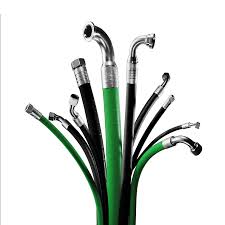
In the design and maintenance of fluid power systems, accurate selection of hydraulic hose dimensions serves as a fundamental factor in ensuring optimal performance and operational stability. Appropriate hose specifications directly influence fluid flow velocity, pressure drop, and overall system productivity.
Whether working with construction machinery, agricultural equipment, or industrial hydraulic applications, understanding key concepts such as hose inner diameter, outer diameter, standard coding systems, and flow capacity is essential. This article clarifies the fundamental principles of hydraulic hose sizing, explains the meaning behind "dash number" identification systems, and analyzes practical risks associated with incorrect selection—providing readers with a methodological approach to achieve maximum power transmission and minimal energy loss.
The Critical Importance of Proper Hose Sizing
Correct hose dimension selection forms the foundation for long-term hydraulic system reliability and maintained efficiency. The core objective involves matching hose passage capacity to system flow requirements to ensure smooth medium transfer and optimal operational response.
Selection errors directly cause system complications: insufficient diameter restricts fluid passage, generating excessive flow velocity and intensified turbulence that creates significant pressure loss and heat buildup—not only reducing efficiency but potentially damaging pumps, valves, and other critical components. Oversized dimensions may result in sluggish system response while adding unnecessary material costs and installation space requirements. Therefore, precision sizing aims to balance flow capacity and diameter to maintain ideal fluid velocity, thereby effectively controlling pressure drop and ensuring power transmission efficiency.
Inner and Outer Diameter: Distinct Roles
Hose performance is primarily defined by two parameters: inner diameter (ID) and outer diameter (OD).
-
Inner Diameter: Determines the hose's fluid throughput capacity per unit time, known as flow capacity. Insufficient ID increases friction between fluid and tube walls, generating substantial pressure drop that reduces actual pressure reaching actuators and diminishes system output force. Excessive ID results in inadequate flow velocity causing delayed system response, while simultaneously increasing hose cost, weight, and spatial requirements.
-
Outer Diameter: The OD parameter relates to mechanical compatibility and installation reliability within the system. It determines proper specification selection for fittings, clamps, and other installation components. Mismatches between OD and installation parts can lead to insecure connections, medium leakage, or even coupling blow-offs under high pressure, endangering personnel and equipment safety.
Understanding the "Dash" Standard Coding System
The "dash" numbering system represents a universal identification framework in hydraulic hose applications, primarily indicating hose inner diameter. The conversion principle follows: each "dash" number equals 1/16 inch. For example, a "-8" hose has an inner diameter of 8/16 inch (1/2 inch). This standardized system ensures rapid, accurate compatibility between hoses and fittings across different manufacturers and equipment, significantly reducing selection errors during field maintenance.
Selection Reference Tool: Hydraulic Hose Nomographic Chart
The hydraulic hose nomographic chart serves as a convenient graphical tool for quickly determining appropriate hose inner diameter. Users need only know two of the three parameters—flow rate, flow velocity, and inner diameter—then connect corresponding scales on the chart to directly read the third unknown value. This method simplifies selection processes and effectively supports engineers in achieving optimal flow configuration.
Comprehensive Factors for Selection Consideration
Beyond core inner and outer diameters, hose selection requires integrated evaluation of additional factors including length (to accommodate equipment movement requirements), operational temperature range, medium compatibility, and rated working pressure. These elements collectively determine hose safety and durability under specific operating conditions.
Consequences of Incorrect Sizing
Improper hydraulic hose dimension selection triggers a series of cascading problems:
-
Undersized Hoses: Cause excessive system pressure loss, abnormal fluid temperature rise, accelerated oil degradation, and potential pump cavitation. These conditions reduce system efficiency and lead to premature hose or component failure, potentially resulting in hose bursts during severe cases. For instance, excessively narrow hoses on excavator arms may cause slow operation and system overheating, ultimately leading to work stoppage during critical operations.
-
Oversized Hoses: Create sluggish system response, unnecessary procurement expenses, and complications in routing and spatial arrangement.
Both scenarios increase leakage risks, cause unplanned downtime, create safety hazards, lead to environmental contamination from fluid release, and intensify system noise and vibration.

Conclusion
In summary, precise control over hydraulic hose dimensions proves to be the decisive factor in achieving high performance, enhanced safety, and long-term durability for entire hydraulic systems.
A Guide to Hydraulic Connectors: Selecting the Right Link for Your System
A Comparative Analysis: ISO 16028 vs. ISO 5675 Hydraulic Couplers