Understanding BSP, BSPP, and BSPT Threads
In industrial and plumbing applications worldwide, selecting the correct thread type is critical for creating secure, leak-free systems. Among the most prevalent standards are BSP (British Standard Pipe) threads, widely adopted across Europe, Australia, and many Commonwealth nations. This international standard covers threads used to connect and seal pipes and fittings via external (male) and internal (female) connections.
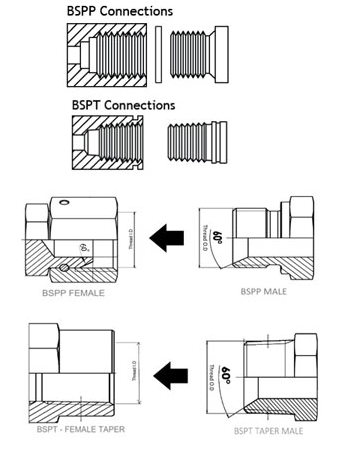
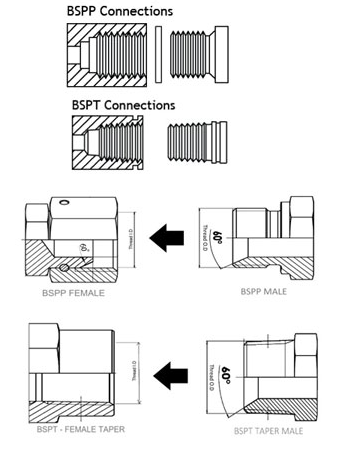
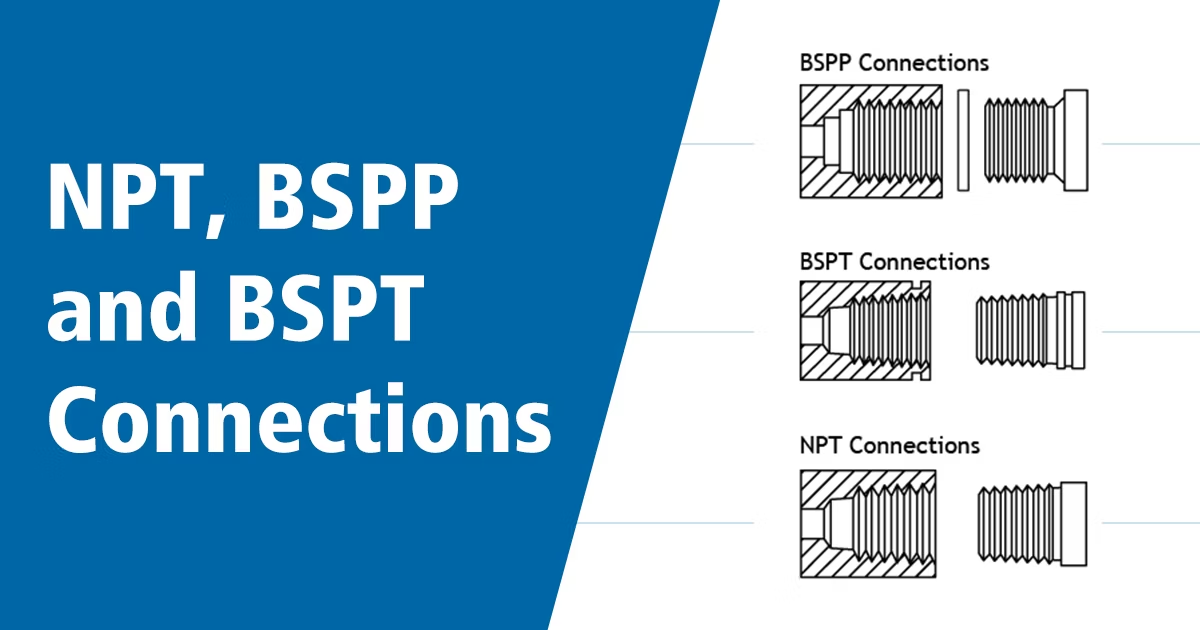
BSP threads are primarily divided into two distinct categories: BSPP (British Standard Pipe Parallel) and BSPT (British Standard Pipe Tapered). Understanding their differences is key to ensuring compatibility and system integrity.
BSPP (Parallel) Threads: These feature a consistent diameter along their entire length, forming a straight thread. The seal in BSPP connections is not achieved by the threads themselves but typically requires a bonded seal, such as an O-ring, washer, or gasket, to create a pressure-tight joint between the mating faces.
BSPT (Tapered) Threads: In contrast, BSPT threads are conical, with the diameter decreasing along the thread length. This taper allows the threads to form a mechanical seal as they are tightened, with the pressure between the engaged threads preventing leaks. Common standards governing BSPT include ISO 7-1, EN 10226-1, and BS 21.
The Core Difference: The fundamental distinction lies in the thread form: parallel vs. tapered. This leads to a crucial compatibility rule: a tapered (BSPT) male thread can mate with either a tapered (BSPT) or a parallel (BSPP) female port. However, a parallel (BSPP) male thread should only be used with a parallel (BSPP) female port and is not designed to seal correctly in a tapered seat.
It is also vital to note that BSP threads (55-degree flank angle) are not interchangeable with the common NPT (National Pipe Tapered) standard (60-degree flank angle) used primarily in North America, despite both being tapered. Attempting to mix them can cause thread damage and lead to leaks.
Application Spotlight: Compression Fittings
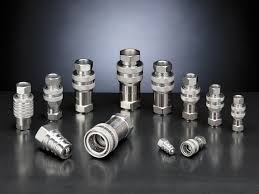
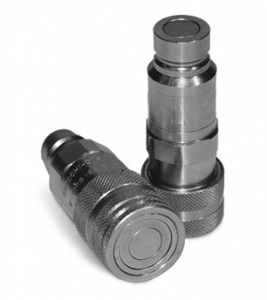
Manufacturers offer robust solutions utilizing these thread types in the form of BSPP compression fittings, BSPT hydraulic fittings, and BSP tube fittings. These components are essential for oil, gas, and water flow control systems.
Advantages of BSPP Compression Fittings:
-
Flame-Free Installation: Eliminates the need for soldering or welding, enhancing safety and convenience.
-
Ease of Assembly: Can be installed quickly with standard tools like an adjustable wrench, reducing labor costs.
-
Reusability & Maintenance: They can be disassembled and reassembled easily, facilitating system modifications or repairs without damaging the pipe.
-
Material & Compatibility: Often constructed from corrosion-resistant materials like stainless steel, they are suitable for high-pressure/temperature environments and work with various pipe types.
Key to a Leak-Free Seal:
For compression fittings, proper installation is paramount. Avoid overtightening, as this can deform the ferrule ("olive") or crush the tubing. Tighten until significant resistance is felt, then typically a further quarter to half turn is sufficient. Always select the fitting material (e.g., specific stainless steel grade) appropriate for the fluid service and environmental conditions to prevent issues like corrosion.
Conclusion:
By understanding the specific roles and compatibility of BSP, BSPP, and BSPT threads, engineers and technicians can select the optimal components. Whether for new installations or maintenance, choosing the correct threaded connection or compression fitting provides a cost-effective, reliable, and straightforward path to a secure, leak-free piping system.
FEIMAN's ISO 16028 Quick Hydraulic Couplings
Maximizing Hydraulic System Efficiency: A Guide to Quick Coupler Installation
Related Article