Hydraulic Connection Solutions: Ensuring Safety, Efficiency, and Leak-Free Performance
In hydraulic systems, robust and trustworthy components are essential to guarantee safety, operational effectiveness, and a sealed environment under extreme pressure. Connectors and quick-release couplings enable swift and safe assembly of system parts, significantly cutting idle periods and enhancing output.
An Overview of Hydraulic Connectors
Hydraulic connectors are specialized parts crafted to join elements within a hydraulic system—such as hoses, tubing, lines, pumps, control valves, and actuators. They facilitate the movement of fluid in a sealed manner under high pressure, providing steadfast linkages that uphold the system's soundness and pressure ratings.
Defining Quick Hydraulic Couplings
Quick hydraulic couplings are purpose-built fittings that allow for the instant joining and separation of hydraulic lines without the need for tools, curtailing fluid spillage and preserving system reliability. They are comprised of two halves: a male (plug) and a female (socket) part that, when engaged, create a tight, leak-proof seal.
What type of fittings are used for hydraulics?
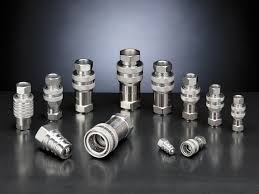
Hydraulic quick couplers permit the fast and secure attachment and detachment of fluid lines without leaks. They boost machinery productivity, reduce non-operational time, and block the ingress of contaminants. Several styles exist, with the most prevalent being poppet, flat face, and threaded flat face couplers, each possessing unique merits for specific use cases.
Poppet-Style Quick Couplings
Poppet quick couplings utilize a spring-actuated internal sealing mechanism (the "poppet") that ensures a positive seal and dependable function, even under intense pressure. This design is sturdy and diminishes the risk of seal failure. They see widespread use in sectors like agriculture, oil & gas, and general industry.

Flat Face Hydraulic Couplers
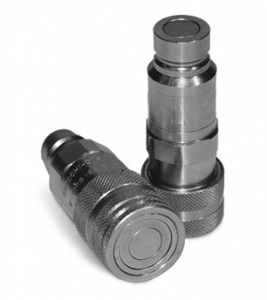
Flat face couplers are engineered to eradicate fluid loss during the coupling and uncoupling process and to inhibit the intake of air or external pollutants. Their flush, smooth interfaces are straightforward to sanitize, rendering them perfect for applications where cleanliness and contamination avoidance are critical, such as in construction and forestry machinery.

Threaded Flat Face Couplers
Threaded flat face couplers, also referred to as screw-to-connect models, combine the benefits of the flat face design with supplementary mechanical reinforcement. The threaded interface withstands strain and vibration, averting premature deterioration. They are exceptionally well-suited for demanding duties and construction equipment functioning under high pressure and recurrent shock loads.

How to maintain hydraulic connections
Consistent upkeep of hydraulic quick couplers is imperative to prevent leaks, prolong service life, and assure operational efficacy. Crucial procedures involve visual examinations for defects, monitoring for oil seepage, and cleansing couplers prior to each use to avert contamination. Protective dust caps safeguard the coupler ends from particulate matter that can compromise O-rings and seals, leading to leaks and impaired equipment function. Substituting worn elements using service kits or complete coupler assemblies is a sound strategy to minimize operational delays and bolster long-term dependability, shielding hydraulic systems from expensive malfunctions.
How to install hydraulic connections
Proper installation of hydraulic connections necessitates meticulous practice. Scrupulously clean coupling internal cavities to prevent contamination and ensure firm joins. Before initiating operation, inspect all fittings for signs of wear and replace any faulty parts to avoid leaks or breakdowns. Tighten couplings to the manufacturer's specified torque values, avoiding excessive force, and never swivel them while pressurized to prevent damage. Adhering to these guidelines sustains system integrity, lessens downtime, and promotes a safer working environment for hydraulic procedures.
The Core Advantages of Hydraulic Quick Couplings in Oil and Gas Transportation
The Essential Role of Check Valves in Hydraulic Systems