A Guide to Hydraulic Connectors: Selecting the Right Link for Your System
In the world of fluid power, the integrity of your hydraulic system hinges on its most fundamental components: the connectors. Choosing the appropriate fitting or coupling is not a mere detail—it's a critical decision that impacts operational efficiency, safety protocols, and overall system reliability across industries like mobile machinery, manufacturing, and agriculture.
This guide will break down the primary categories of hydraulic connections, from robust threaded standards like JIC, ORFS, and NPT to advanced quick-disconnect solutions. We'll also highlight how industry leaders, such as Hebei FEIMAN, engineer couplings to address the challenges of high-pressure and high-cycle applications.
The Rationale for Variety: Why No Single Connector Fits All
Hydraulic systems are deployed in vastly different environments, each with unique demands. A connector perfect for a stationary industrial press would be ill-suited for a farm tractor's implement that changes frequently. Consequently, a range of connector types has been developed, each engineered to excel in specific areas like:
-
Pressure rating and pulse resistance
-
Ease and speed of connection/disconnection
-
Resistance to vibration and leakage
-
Physical space constraints
Exploring the Primary Connector Families
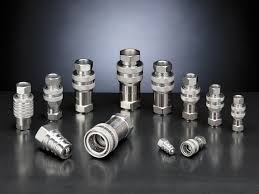
1. Quick-Release Couplings (QRCs)
-
Function: Enable instant, tool-free mating and unmating of fluid lines.
-
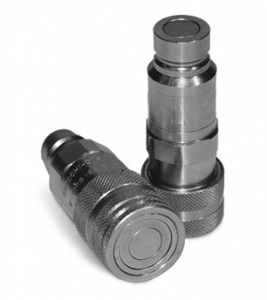
Key Features: Modern designs often incorporate flat-face technology, which minimizes fluid spillage and air inclusion upon disconnect. Internal shut-off valves are standard, protecting the system from contamination.
-
Ideal For: Applications requiring frequent attachment changes, such as connecting auxiliary equipment, test stands, and assembly lines.
2. Threaded Connectors
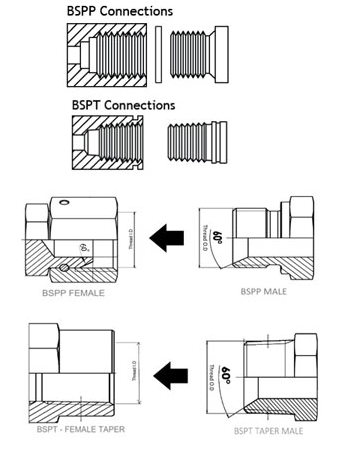
This category includes several standardized thread forms, each with a distinct sealing mechanism:
-
JIC (37° Flare): Known for its metal-to-metal flare seal, offering excellent vibration resistance and is widely used in mobile hydraulics.
-
ORFS (O-Ring Face Seal): Features an O-ring seated in a groove on the fitting's face, creating a superior, leak-free seal that is ideal for high-pressure systems where leakage is unacceptable.
-
NPT (National Pipe Tapered): A common thread type that seals through the wedging action of the tapered threads. While prevalent, it requires thread sealant and can be more prone to leakage under vibration.
3. Banjo Fittings
-
Function: Provide a compact, low-profile solution for routing hydraulic fluid, typically at a 90-degree angle.
-
Key Features: Consist of a hollow "banjo" bolt that passes through a spherical fitting, allowing fluid to pass through the bolt itself.
-
Ideal For: Tight spaces where conventional fittings won't fit, commonly found in braking systems, lubricant lines, and fuel systems.
4. Permanent Connections (Brazed & Welded)
-
Function: Create a seamless, high-strength, and permanent joint between a connector and a hose or tube.
-
Key Features: This process eliminates the potential leak paths associated with threaded or removable connections.
-
Ideal For: The most demanding applications involving extreme pressures, high temperatures, or harsh environments where reliability is paramount and disassembly is not intended.
By understanding the strengths and intended use of each connector family, engineers and technicians can make informed decisions that ensure peak performance and longevity for their hydraulic systems.
FEIMAN's connector solutions and product examples
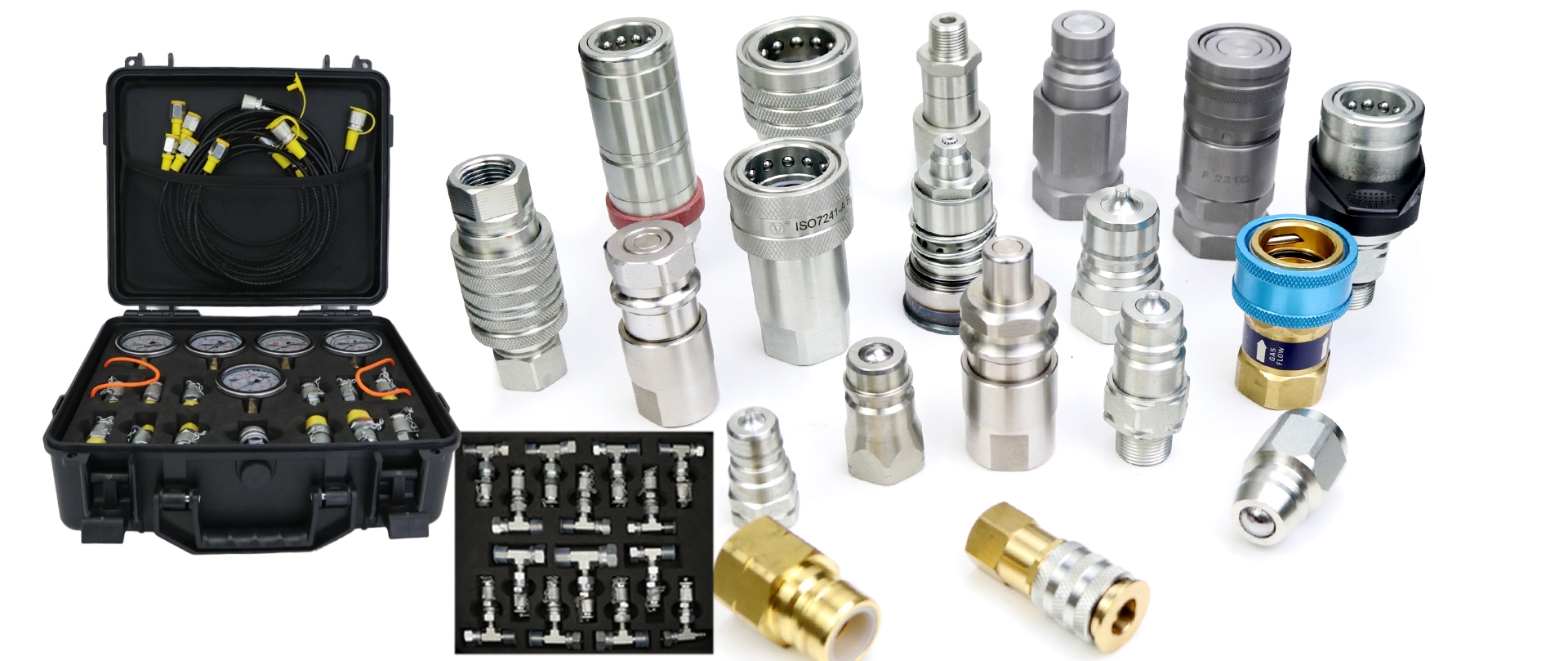
FEIMAN offers a diverse range of hydraulic quick‑release couplings focused on efficiency and safety across various industries.
- Flat Face Couplings (e.g., FFH, FFN,FFS): Meet ISO 16028 standards, reduce spills and contamination, ideal for construction and agriculture.
- Poppet Valve Couplings (e.g., NV, KNV, KNVSS): Comply with ISO 7241‑1, traditional choice for general hydraulic use.
- Screw‑to‑Connect Couplings (e.g.,HVV): Designed for high‑pressure environments; secure threaded connections, often connect under residual pressure.
- MultiFaster Multi‑Connection Systems: Allow simultaneous connection of multiple lines, reducing setup time and eliminating misconnections.
FEIMAN's focus on quick‑release technology delivers robust, efficient, and application‑specific solutions for modern hydraulic systems.
Hydraulic Fitting FAQs: Thread Types & Sealing Methods
How Hydraulic Hose Dimensions Determine System Efficiency and Reliability