304 vs. 316 Stainless Steel: How to Select the Right Grade for Your Project

In demanding sectors like agriculture, manufacturing, and construction, the selection of materials is a critical decision that impacts the longevity and performance of your equipment. Among the most trusted materials are 304 and 316 stainless steel. While both are excellent choices, understanding their key differences is essential for making a cost-effective and durable selection for your next project.
1. Decoding the Composition: What's Inside?
304 Stainless Steel: Often referred to as "A2 Stainless" in industry parlance, 304 is the workhorse of the stainless steel family. Its composition is primarily 18% chromium and 8% nickel, which provides a reliable defense against corrosion and oxidation, making it suitable for a wide array of standard applications.
316 Stainless Steel: Known as "A4 Stainless," 316 stainless steel contains a significant addition: 2-3% molybdenum. This extra element dramatically enhances its resistance to chlorides and other industrial solvents. It is the superior choice for harsh, corrosive environments.
2. Performance and Durability: Which is Stronger?
304 Stainless Steel: It offers good overall strength and is perfectly capable for most structural and general-purpose applications. Its mechanical properties are well-suited for environments without aggressive chemical agents.
316 Stainless Steel: While slightly different in tensile strength, the molybdenum content gives 316 a distinct advantage in terms of overall durability, particularly at elevated temperatures and in acidic or saline conditions. It is inherently more resilient against pitting and crevice corrosion.
3. Cost-Benefit Analysis: Making the Smart Choice
The enhanced corrosion resistance of 316 stainless steel comes with a higher price tag due to its molybdenum content. For projects with budget constraints and where exposure to corrosive elements is minimal, 304 is an economical and effective choice. However, investing in 316 for challenging environments prevents premature failure and costly replacements, offering greater value in the long run.
4. Application Guide: Where to Use Each Grade
-
Agriculture: For general farm equipment, storage tanks, and structures not exposed to fertilizers or de-icing salts, 304 is sufficient. For operations near the coast or those using aggressive chemicals, 316 is mandatory.
-
Manufacturing: In settings involving chemical processing, pharmaceuticals, or food production with high salt or acid content, 316 is the definitive choice. 304 is suitable for non-critical parts and frames.
-
Construction: 304 is widely used for interior fixtures, handrails, and architectural facades in urban settings. For coastal buildings, bridges, highway guardrails (where de-icing salts are used), and offshore structures, 316 is non-negotiable.

5. HEBEI FEIMAN's Stainless Steel Solutions
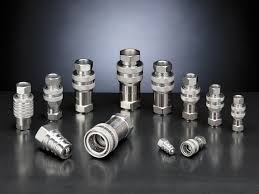
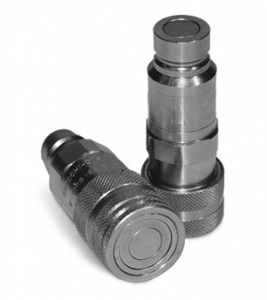
At HEBEI FEIMAN, we provide high-quality fluid power components crafted from both 304 and 316 stainless steel to meet your specific operational demands. Our range includes ISO 7241 Series B Quick Couplers and other hydraulic adapters, available in various sizes such as 1”, ¾”, ½”, 3/8”, and ¼”.
These products are engineered to excel in general-purpose, machine tool, mobile hydraulic, and severe-service applications. No matter your industry, we have the right stainless steel solution to ensure your equipment operates reliably and efficiently.


Final Recommendation:
Your choice ultimately depends on the operating environment. For tough, corrosive conditions, 316 is your best bet for uncompromised performance. For less demanding jobs, 304 will save you money without sacrificing quality. Always match the material to the application to guarantee optimal service life.
If you are unsure which stainless steel grade is the right fit for your application, our technical experts are here to help. Contact us today at sales@feimanfluid.com or give us a call for personalized advice.
High Pressure Couplers: The Unsung Hero Powering Modern Industrial Giants
How to choose the correct quick connect couplers size?