What’s the Difference Between BSP and NPT Thread?
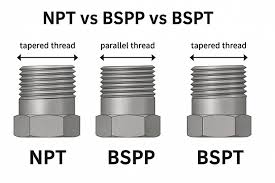
When it comes to pipe threads, understanding the differences between BSP (British Standard Pipe) and NPT (National Pipe Tapered) threads is essential, especially if you’re working with plumbing, hydraulic systems, or industrial applications. Although both types of threads serve similar functions, they are not interchangeable and have distinct characteristics. But what exactly sets them apart?
The key difference between BSP and NPT threads lies in their design and regional usage. BSP threads are more common in Europe and Asia, while NPT threads are predominantly used in North America. Their thread angles, shapes, and sealing methods differ, impacting compatibility. So, why is this distinction important?
Let’s dive into the specifics of each thread type to understand how they function, where they’re commonly used, and the implications of choosing the wrong one for your project.

What is a BSP Thread?
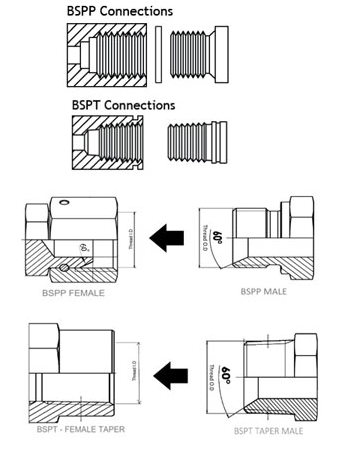
BSP, or British Standard Pipe, threads are a widely used threading standard in many countries. This thread type has two subtypes: BSPT (British Standard Pipe Taper) and BSPP (British Standard Pipe Parallel).
BSP threads are based on ISO 228 and Whitworth standard threads and have a 55-degree angle and are usually found in European and Asian markets. They rely on either parallel or tapered designs to create a seal.
-
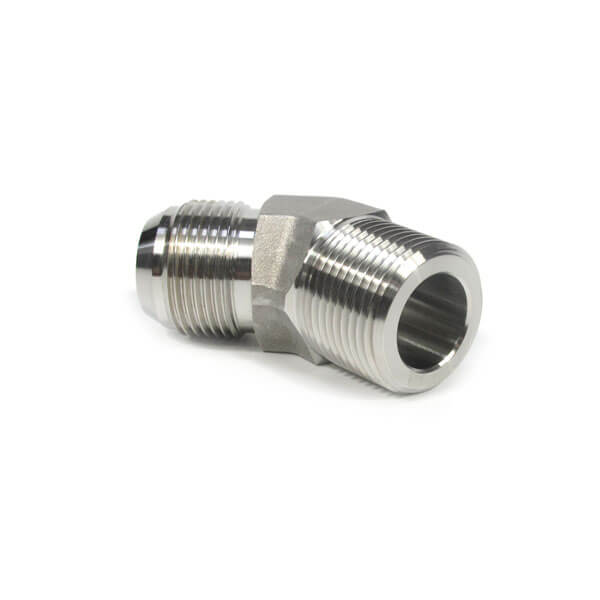
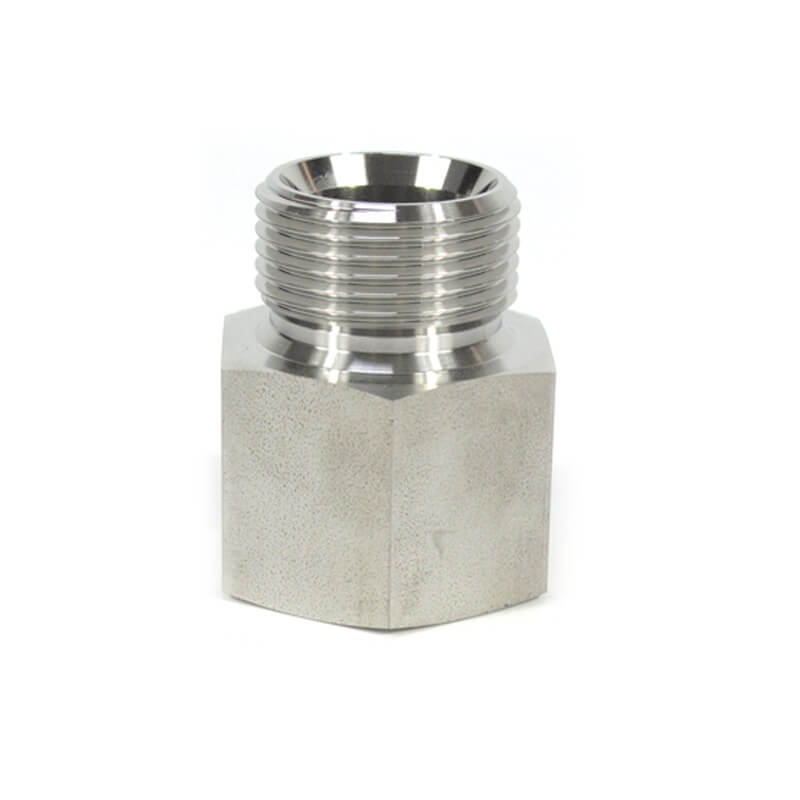
- JIS Male to BSPT Male BSP Female to BSPP Male Adapter
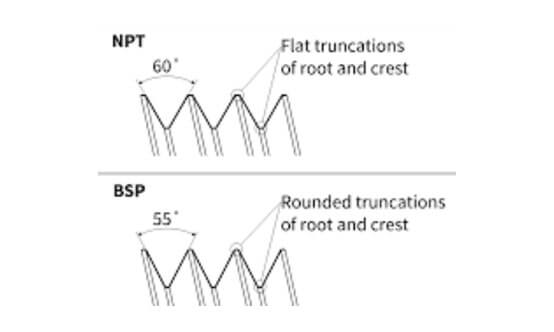
- BSP threads are designed with a 55-degree thread angle, which differs from the 60-degree angle of NPT threads. This angle, along with the parallel (BSPP) or tapered (BSPT) designs, affects the way the threads seal. BSPP threads require an additional sealing component like an O-ring, while BSPT threads form a seal through taper alone.
-
What is NPT Thread?
NPT (National Pipe Thread) threads or male pipe threads are the most popular type of seal for pressure calibration systems in the U.S. and Canada. NPT male adapters have a taper thread with 60 degrees angle.

Advantages of NPT Fittings
Given that the standard has been around for a while, it has a set of advantages when being used. It is readily available in vendor inventories, with multiple sizes and materials to choose from. This allows you to use them for many applications at varying pressures. Moreover, they can be assembled in a simple manner as the metal-to-metal contact offers an excellent seal.
Disadvantages of NPT Fittings
The metal-to-metal contact in NPT fittings relies on the deformation of the threads to form a secure seal. This, however, means that one cannot use them in applications that require frequent disassembly.
If used improperly, that is, without correct alignment, overtightening, or wrong sizing, ports may expand, and cracks may form on the threads. This, in turn, leads to the formation of leakage pathways from where the medium can leak out. It is for this reason that NPT fittings are not recommended for extremely high-pressure applications.
NPT and BSP Thread Difference
BSP and NPT threads have more to do with where than what, which is an important distinction. Where NPT is prevalent in the U.S. and Canada, BSP is the primary standard in the UK, Europe, Asia, Australia, New Zealand, South Africa and many other countries.
NPT and BSP threads are not interchangeable due to the differences in thread forms. NPT threads are pointed in the peaks and valleys, where BSPs are rounded. Most notably, the NPT thread angle is 60 degrees versus the BSP 55-degree angle.
Though it has been tried, problems always arise when trying to thread a NPT male form into a BSPP female form. The dissimilar pitch will allow a misalignment of the threads, which causes leakage of fluid and even catastrophic failure under pressure.
Conclusion
Choosing between BSP and NPT threads is critical for ensuring a leak-free and secure connection in piping and fluid systems. While both serve similar purposes, they have different designs, standards, and regional uses that make them incompatible. Ensuring you select the right thread for your application can save time, costs, and potential issues down the line.
HEBEI FEIMAN Hydraulics is a BSP & NPT stainless steel hydraulic fittings and adapters supplier and manufacturer, please feel free to contact us for more details.

Differences between the ISO A and ISO B Quick Couplings
Hydraulic Quick Couplings Propel Upgrades in Industrial Automation and Energy Systems